Protective Factors for Veterans and First Responders Mental Health| Fire Team K9
For many veterans and first responders, professional communities provide a strong sense of belonging. Shared responsibilities, experiences, and values can create relationships that remain meaningful long after a shift or deployment ends.
However, belonging within an occupational community may not always translate into connection outside it.
Retirement, injury, relocation, or changes in employment can affect access to familiar social environments. Opportunities for community participation can therefore become especially important during periods of transition.
Social relationships and interpersonal support are well-established considerations in occupational mental health research. Community participation may provide opportunities to develop those relationships, maintain routines, and experience a sense of belonging.
Where Dogs Can Participate
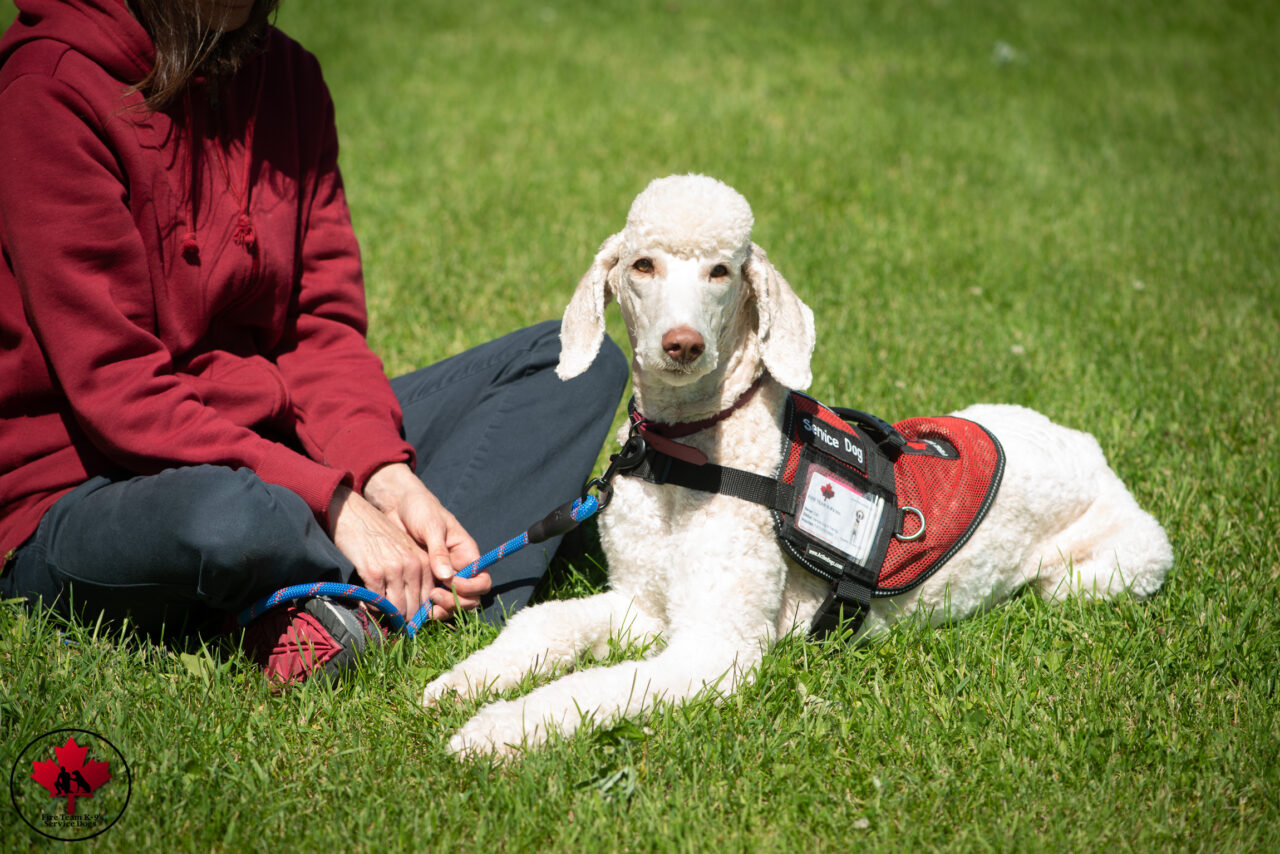
Dogs can create opportunities to participate in community activities.
Training classes, group walks, recreational events, and volunteer programs bring people together around a shared interest.
Psychiatric service dog research provides some relevant findings. Veterans Affairs Canada’s pilot study reported that participants became more comfortable venturing into their communities after receiving a service dog. A separate 2024 controlled trial found improvements in companionship and social isolation.
However, community access is not always easier with a service dog. Veterans in the Canadian pilot study also described access challenges, and other research has identified stigma and access denials as potential barriers.
For facility dog programs, group activities may provide an opportunity for people to participate without needing to own or manage a dog themselves.
Putting the Protective Factor Into Practice
Community participation can begin with a familiar, structured activity.
A monthly dog walk, recreational class, or volunteer event can create opportunities for repeated contact with others.
Programs should offer participants choice, predictable expectations, and the ability to participate without pressure to disclose personal experiences.
The goal is to make community involvement accessible and meaningful.
A question to consider: Where do you feel that you belong, and what activities might help you build additional connections?
References
Wild, J., et al. (2021). Prospective risk and protective factors for psychopathology and wellbeing in civilian emergency services personnel: A systematic review. https://pubmed.ncbi.nlm.nih.gov/33388463/
Leighton, S. C., et al. (2024). Service dogs for veterans and military members with posttraumatic stress disorder. JAMA Network Open, 7(6), e2414686. https://doi.org/10.1001/jamanetworkopen.2024.14686
Veterans Affairs Canada. Service dog pilot study. https://veterans.gc.ca/en/contact-us/help/faqs/service-dog-pilot-study
