Protective Factors for Veterans and First Responders | Fire Team K9
Physical activity plays an important role in maintaining physical and psychological health. For veterans and first responders, regular movement can provide opportunities to manage stress, maintain fitness, and participate in activities outside occupational responsibilities.
Research also suggests that exercise may benefit people already experiencing PTSD.
A 2025 systematic review and meta-analysis of 12 randomized controlled trials found that physical activity interventions were associated with improvements in PTSD symptoms, sleep quality, anxiety, and depression. The authors cautioned that limitations in the available studies require further investigation.
Movement does not need to involve an intensive workout. Walking, hiking, recreational activities, and other accessible forms of exercise can all contribute to a more active lifestyle.
Where Dogs Can Participate
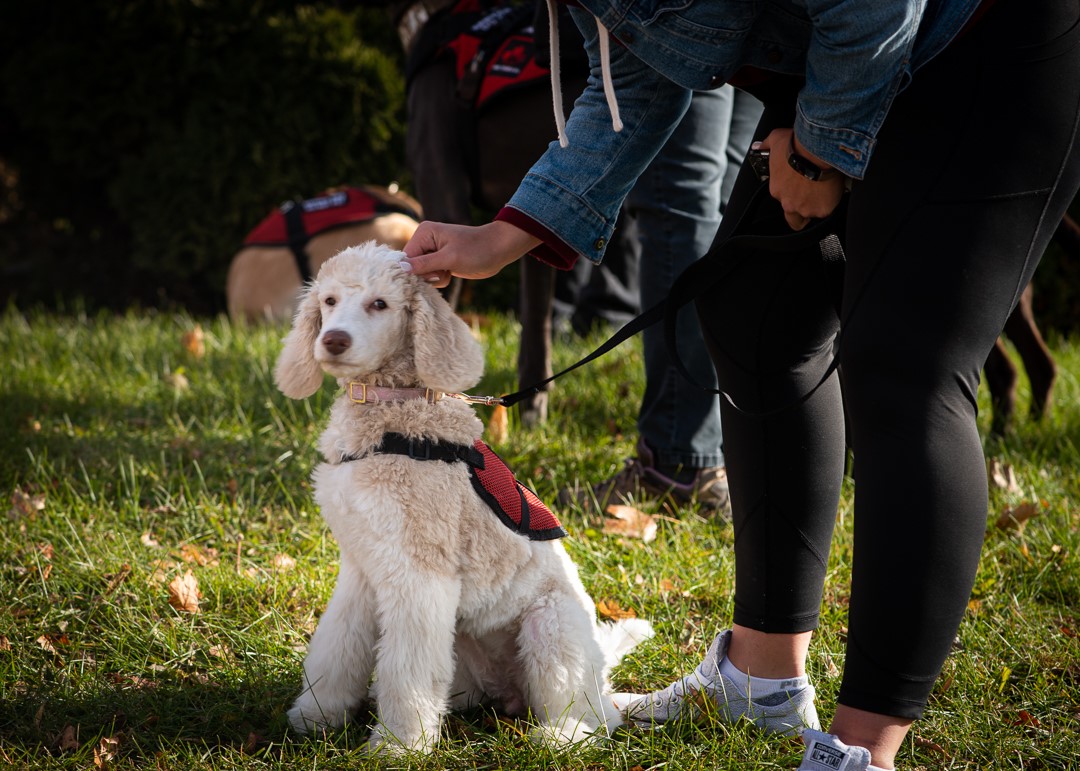
Dogs can provide both a reason and an opportunity to be physically active.
Daily walks, training exercises, outdoor games, and group hikes create regular opportunities for movement.
A systematic review of dog-facilitated physical activity interventions found that 82% of the included studies reported changes favouring the canine-assisted intervention. However, the authors also identified methodological limitations and called for stronger research.
Veterans Affairs Canada’s service dog pilot study reported a slight increase in physical activity among 18 veterans with PTSD after receiving a service dog.
For facility dog programs, structured group walks or outdoor training activities may provide an approachable way to encourage participation, particularly when the activity also offers opportunities for social connection.
Putting the Protective Factor Into Practice
Consider choosing an activity that is enjoyable, accessible, and realistic to repeat.
A short walk with a dog, a group hike, or an outdoor training session can provide opportunities for regular movement without making exercise feel like another performance requirement.
Activities should always reflect the participant’s physical abilities, health needs, and preferences, as well as the dog’s fitness, welfare, and environmental conditions.
A question to consider: What kind of movement do you enjoy enough to make it part of your regular routine?
References
Soares, J., et al. (2015). Odds of getting adequate physical activity by dog walking. Journal of Physical Activity and Health. https://pubmed.ncbi.nlm.nih.gov/24733365/
Increasing physical activity by four legs rather than two: Systematic review of dog-facilitated physical activity interventions. (2020). https://pubmed.ncbi.nlm.nih.gov/31959677/
Effects of physical activity on patients with posttraumatic stress disorder: A systematic review and meta-analysis of randomized controlled trials. (2025). https://pubmed.ncbi.nlm.nih.gov/39833088/
Veterans Affairs Canada. Service dog pilot study. https://veterans.gc.ca/en/contact-us/help/faqs/service-dog-pilot-study
