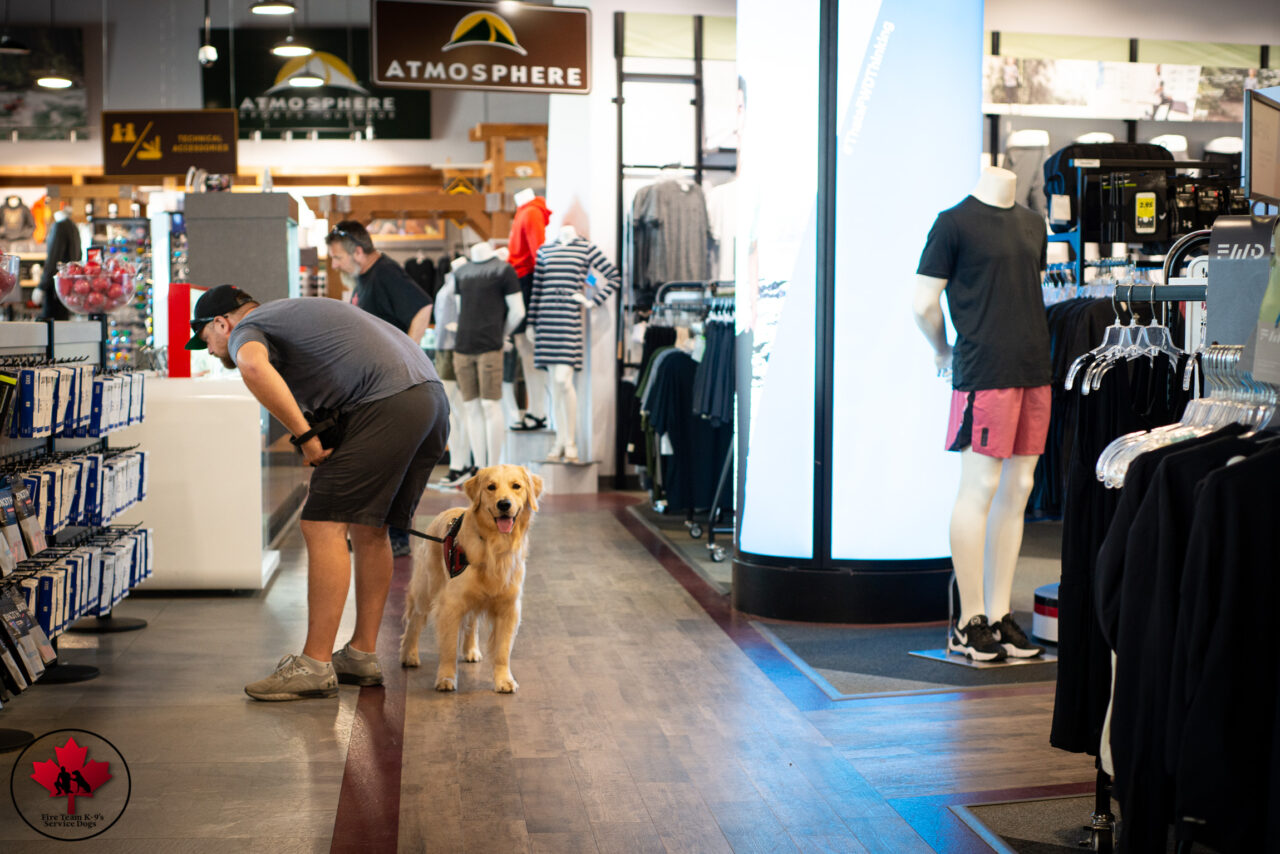
Protective Factors for Veterans and First Responders Mental Health | Fire Team K9
Psychological flexibility involves responding to changing circumstances while remaining connected to personal values and meaningful goals.
It includes the ability to notice difficult thoughts and emotions without allowing them to determine every action.
In demanding occupations, established procedures and predictable responses can be essential for safety. However, different situations may require different approaches.
Psychological flexibility helps people recognize when a familiar strategy is useful and when another response may be more appropriate.
A 2024 systematic review and meta-analysis of Acceptance and Commitment Therapy research found that improvements in psychological flexibility were associated with reductions in psychological distress.
This supports psychological flexibility as a relevant therapeutic process, although it does not establish that dog training can prevent PTSD.
Where Dogs Can Participate
Dog training offers practical opportunities to experience flexibility.
A dog may not respond to a cue as expected. The handler may need to reconsider the environment, timing, communication, or difficulty of the task.
Effective training involves observing what is happening and adjusting the approach.
Participants can practise patience, problem-solving, and responding to unexpected outcomes without interpreting every unsuccessful attempt as failure.
A facility dog handler can guide reflection on these experiences and connect them to everyday situations.
The exercise should respect canine welfare and use positive, humane training methods. Dogs should never be deliberately frustrated or placed under unnecessary stress to create a lesson for participants.
Putting the Protective Factor Into Practice
A structured activity might involve teaching a familiar behaviour in a slightly different environment.
Participants can observe how changes in distractions, timing, or communication influence the dog’s response.
They can then reflect on how they respond when their original plan needs adjustment.
The goal is to practise adapting behaviour while remaining focused on a meaningful objective.
A question to consider: When something doesn’t go according to plan, how easily can you change your approach?
References
Macri, J. A., & Rogge, R. D. (2024). Examining domains of psychological flexibility and inflexibility as treatment mechanisms in acceptance and commitment therapy: A comprehensive systematic and meta-analytic review. Clinical Psychology Review, 110, 102432. https://doi.org/10.1016/j.cpr.2024.102432
Rowe-Johnson, M. K., Browning, B., & Scott, B. (2025). Effects of acceptance and commitment therapy on trauma-related symptoms: A systematic review and meta-analysis. Psychological Trauma, 17(3), 668–675. https://doi.org/10.1037/tra0001785
Evidence note: Dog training is presented here as a proposed experiential teaching method. It has not been established as an equivalent to Acceptance and Commitment Therapy.
