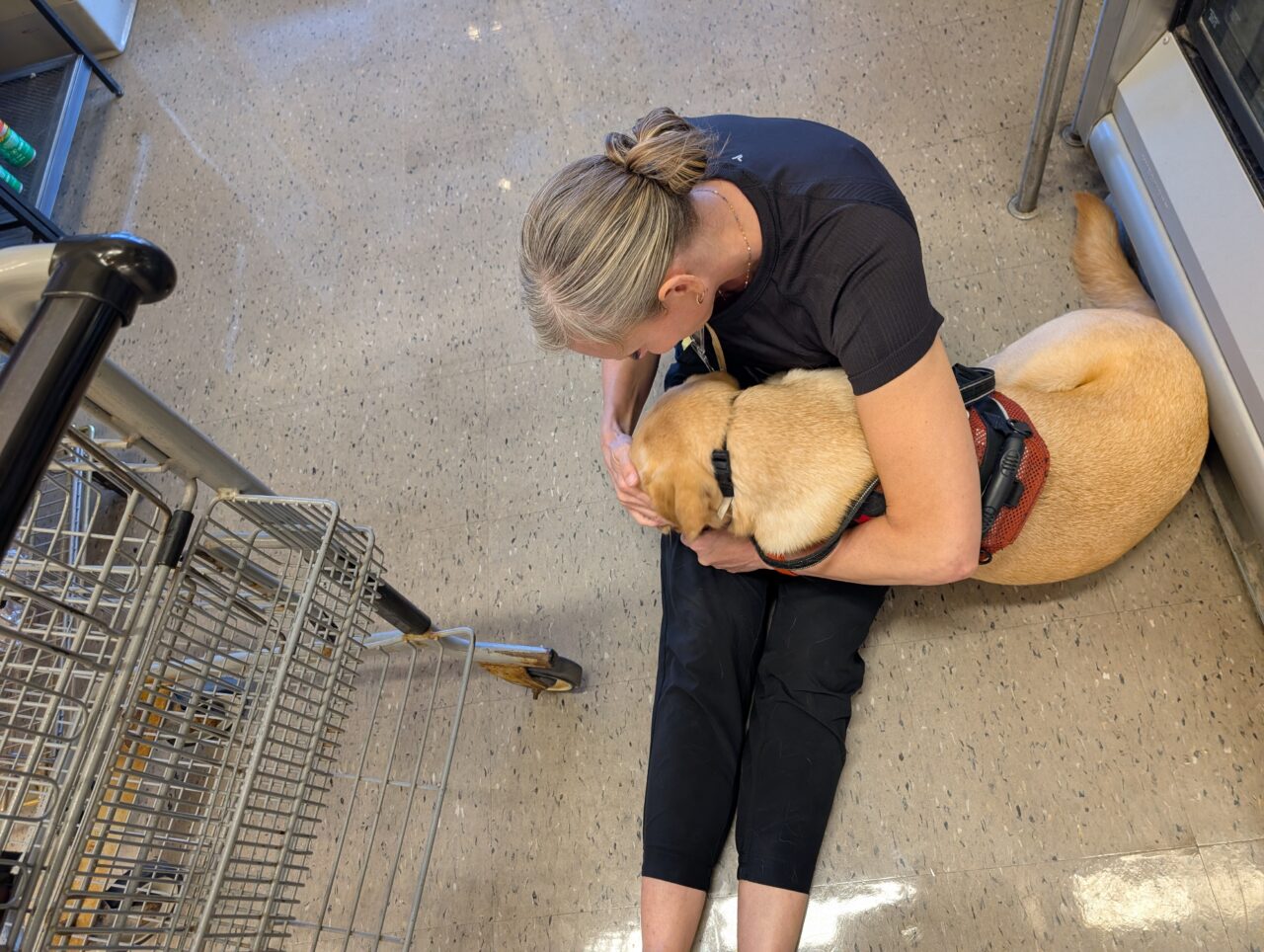
Service Dogs are trained to help people manage disability-related challenges, but new research suggests that the process of training these dogs may also benefit the people involved.
A 2026 study published in Archives of Rehabilitation Research and Clinical Translation examined the psychological effects of participating in a Service Dog Training Program. Researchers followed 118 military-connected participants who helped prepare dogs for eventual placement with other veterans.
The findings suggest that structured dog training may offer benefits beyond the development of the dogs themselves.
What the Researchers Studied
Participants were recruited through two U.S. military medical centres and included active-duty personnel, veterans, and military dependants experiencing psychological difficulties, including PTSD symptoms.
Through Warrior Canine Connection, participants attended two one-hour dog training sessions each week for six weeks. They worked with Labrador Retrievers and Golden Retrievers learning the skills required of future Service Dogs.
The training took place alongside participants’ existing mental health care. Researchers measured PTSD, anxiety, depression, perceived stress, and resilience before and during the program.
Improvements in Psychological Symptoms
Following the six-week program, participants reported measurable improvements in several areas.
PTSD symptom scores decreased by an average of 5.8 points, while anxiety and depression scores decreased by 1.5 and 1.2 points, respectively. Researchers also observed improvements in perceived stress and resilience.
The changes were generally small to moderate, and not every outcome improved significantly.
The study did not include a separate control group, so researchers could not determine whether dog training itself caused these improvements. Participants were also receiving other mental health services, which may have contributed to the results.
Nevertheless, the findings warrant further investigation into the psychological benefits of participating in structured canine training.
Learning Through Working With Dogs
Training a dog requires observation, patience, consistency, and clear communication. The person giving instructions must pay attention to the dog’s responses and adjust their own behaviour when something isn’t working.
These activities offer practical opportunities to exercise skills relevant to emotional regulation and everyday functioning.
A frustrated participant may need to recognize their reaction before continuing an exercise. Someone learning a new training technique experiences the connection between their actions and the dog’s response. Progress is observable, sometimes within minutes.
Participants in the Warrior Canine Connection program also contributed to preparing dogs that would eventually assist other veterans. That responsibility may offer a sense of purpose and accomplishment.
The study did not determine which aspects of training produced the observed changes. The interaction with the dogs, structured activities, social participation, and opportunity to contribute may all have played a role.
Applications for Fire Team K9
At Fire Team K9, dog training is already central to developing successful Operational Stress Injury Service Dog partnerships. Handlers learn to recognize canine behaviour, communicate effectively, and build the consistency required for reliable task performance.
This research raises possibilities for using similar activities in mental health education and supportive programming for veterans and first responders.
Training exercises could provide practical ways to explore emotional regulation, communication, frustration tolerance, and confidence. With appropriate professional guidance, participants could examine how the skills they practise with a dog relate to situations in their everyday lives.
Such programming would require its own evaluation. The Warrior Canine Connection study does not establish that other dog training programs will produce equivalent clinical results.
The findings do, however, suggest that the benefits of Service Dog training may extend to people who participate in the process, even when they are preparing dogs for someone else.
As research develops, understanding these effects could help organizations design programming that makes greater use of the learning opportunities already present in canine training.
References
An exploratory assessment of service dog training for the treatment of military members with posttraumatic stress: A pre-post interventional trial. (2026). Archives of Rehabilitation Research and Clinical Translation. https://doi.org/10.1016/j.arrct.2026.100641
U.S. Department of Veterans Affairs, National Center for PTSD. (n.d.). PTSD Checklist for DSM-5 (PCL-5). https://www.ptsd.va.gov/professional/assessment/adult-sr/ptsd-checklist.asp
