A paramedic arrives for a counselling appointment following a difficult call. Before they can discuss what has been troubling them, they find themselves explaining dispatch procedures, triage decisions, operational responsibilities, and why certain choices were made.
Some explanation is reasonable. A therapist needs to understand the circumstances surrounding an experience.
But when much of an appointment is spent explaining the occupation itself, there may be less time available to address the symptoms that brought the person to treatment.
For veterans and public safety personnel, finding an appropriate therapist can involve evaluating both the clinician’s understanding of their occupational environment and their qualifications to treat the presenting concerns.
The Occupational Context
Public safety personnel are routinely exposed to situations that most people encounter rarely, if ever.
Depending on their role, they may respond to serious injuries, fatalities, violence, emergencies involving children, or incidents in which their own safety is threatened.
These exposures can accumulate over years of service.
There are also organizational pressures to consider. Shift work, staffing demands, workplace relationships, disciplinary processes, and decisions made within complex command structures can influence psychological well-being.
A Canadian study by Carleton and colleagues (2018) examined mental disorder symptoms among public safety personnel.
Of the participating personnel, 44.5% screened positive for symptoms consistent with at least one mental disorder, while 23.2% screened positive for PTSD.
These were screening results rather than confirmed clinical diagnoses. They also reflect the study sample at the time of data collection, rather than current rates across every Canadian public safety occupation.
The findings nevertheless demonstrate substantial mental health needs within the populations studied.
Understanding the Occupation and Treating the Condition
A clinician who regularly works with veterans or first responders may be familiar with operational terminology, occupational expectations, and the circumstances surrounding traumatic exposures.
That experience can make conversations more efficient and help the clinician recognize relevant aspects of the person’s working life.
It may also help when discussing concerns such as returning to operational duties, navigating workplace benefits, or managing the effects of symptoms on professional relationships.
Clinical competence requires additional qualifications.
For someone seeking treatment for PTSD, the clinician should have appropriate training in assessment and evidence-based psychotherapy.
The 2023 VA/DoD clinical practice guideline strongly recommends Cognitive Processing Therapy, Prolonged Exposure, and EMDR as individual trauma-focused treatments for PTSD.
A therapist’s occupational experience does not automatically establish competence in these approaches.
Likewise, a clinician who has never served in the military or worked in public safety may still provide effective treatment. They need the relevant clinical skills and a willingness to understand the person’s occupational circumstances.
Questions That Help Establish Clinical Fit
Professional biographies often describe experience in broad terms. A therapist might advertise expertise in trauma, first responder mental health, or occupational stress injuries without specifying the treatments they provide.
A consultation is an opportunity to ask for that information.
You might begin by asking what experience the clinician has with people in your occupation and what types of concerns they commonly treat.
From there, ask which PTSD treatments they are trained to deliver and how they decide which approach to recommend.
Their explanation should connect the proposed treatment to your symptoms and goals.
If returning to work is a concern, ask about their experience with occupational functioning, workplace accommodations, or return-to-work planning.
You can also ask about confidentiality, particularly when treatment is being funded or arranged through an employer, insurer, or benefits program.
The clinician should explain what information is protected, what reporting obligations may apply, and whether any information will be shared with third parties.
Facility Dogs and Familiarity With Mental Health Services
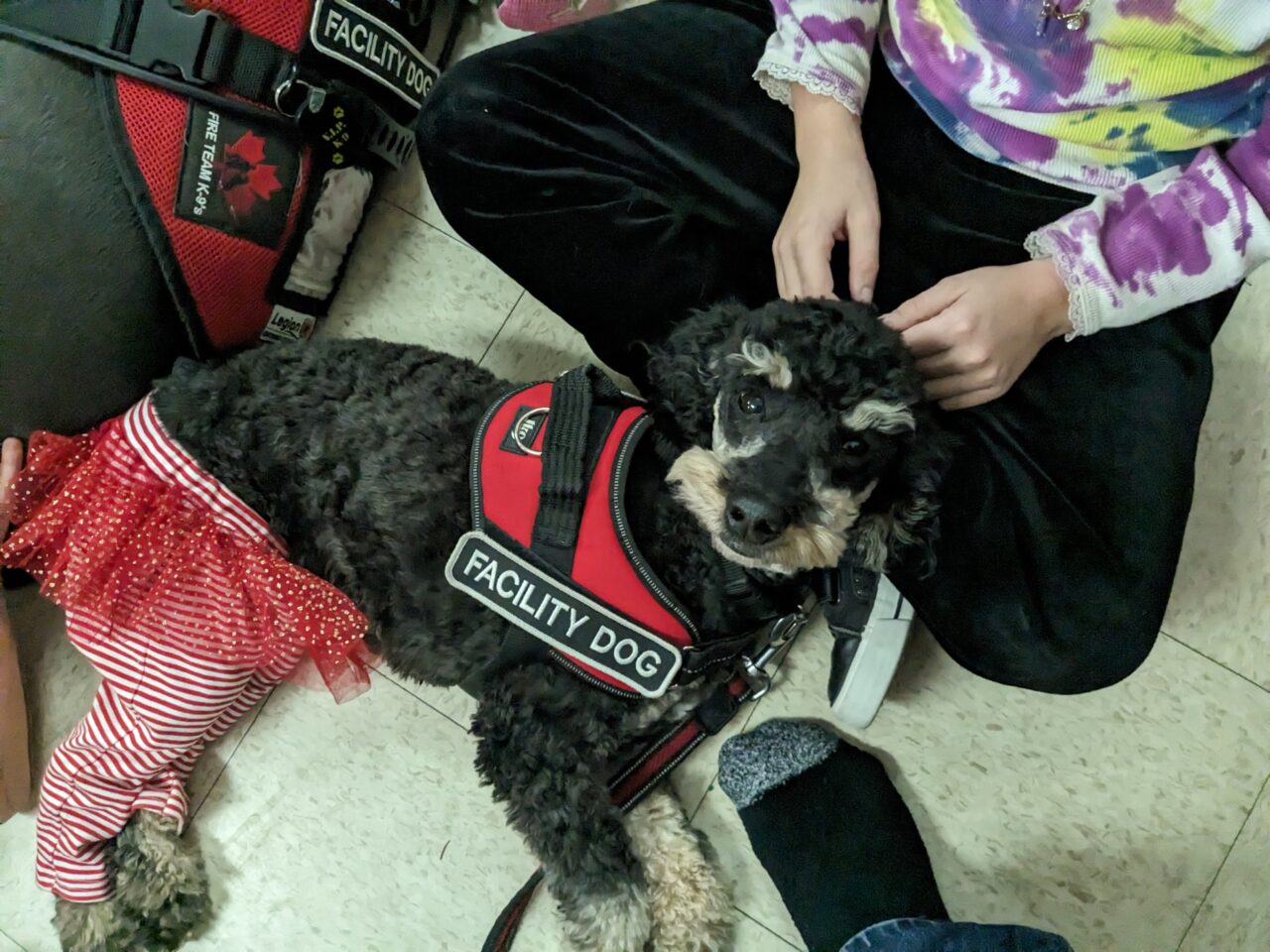
Facility dogs working alongside qualified professionals can participate in programs designed to introduce veterans and first responders to available mental health resources.
A workplace wellness visit or group activity may provide an opportunity to meet a professional in an informal setting.
Someone might initially attend because they enjoy interacting with dogs and later ask questions about services offered by the organization.
This is a potential application of facility dog programming, although research has not established that these interactions consistently increase access to appropriate psychotherapy.
The handler’s professional qualifications remain important. Participants should understand the services being offered and whether an interaction is recreational, educational, supportive, or clinical.
Making an Informed Decision
A therapist should be able to explain their qualifications, the treatment they recommend, and how they intend to evaluate progress.
You should also feel able to ask questions and raise concerns without having to defend your decision to do so.
Occupational familiarity can contribute to a productive therapeutic relationship. Appropriate clinical training provides the foundation for treating the condition itself.
Finding someone who can bring those capabilities together may take more than one consultation, particularly in areas where specialized services are limited.
References
Carleton, R. N., et al. (2018). Mental disorder symptoms among public safety personnel in Canada. The Canadian Journal of Psychiatry, 63(1), 54–64. https://doi.org/10.1177/0706743717723825
U.S. Department of Veterans Affairs & U.S. Department of Defense. (2023). VA/DoD clinical practice guideline for the management of posttraumatic stress disorder and acute stress disorder. https://www.healthquality.va.gov/guidelines/MH/ptsd/
National Institute for Health and Care Excellence. (2018). Post-traumatic stress disorder (NICE Guideline NG116). https://www.nice.org.uk/guidance/ng116
Zahra, S. (2026). Finding the right help: Advocating for effective trauma-focused therapy for public safety personnel. Frontline 9 Consulting. Webinar presentation.
