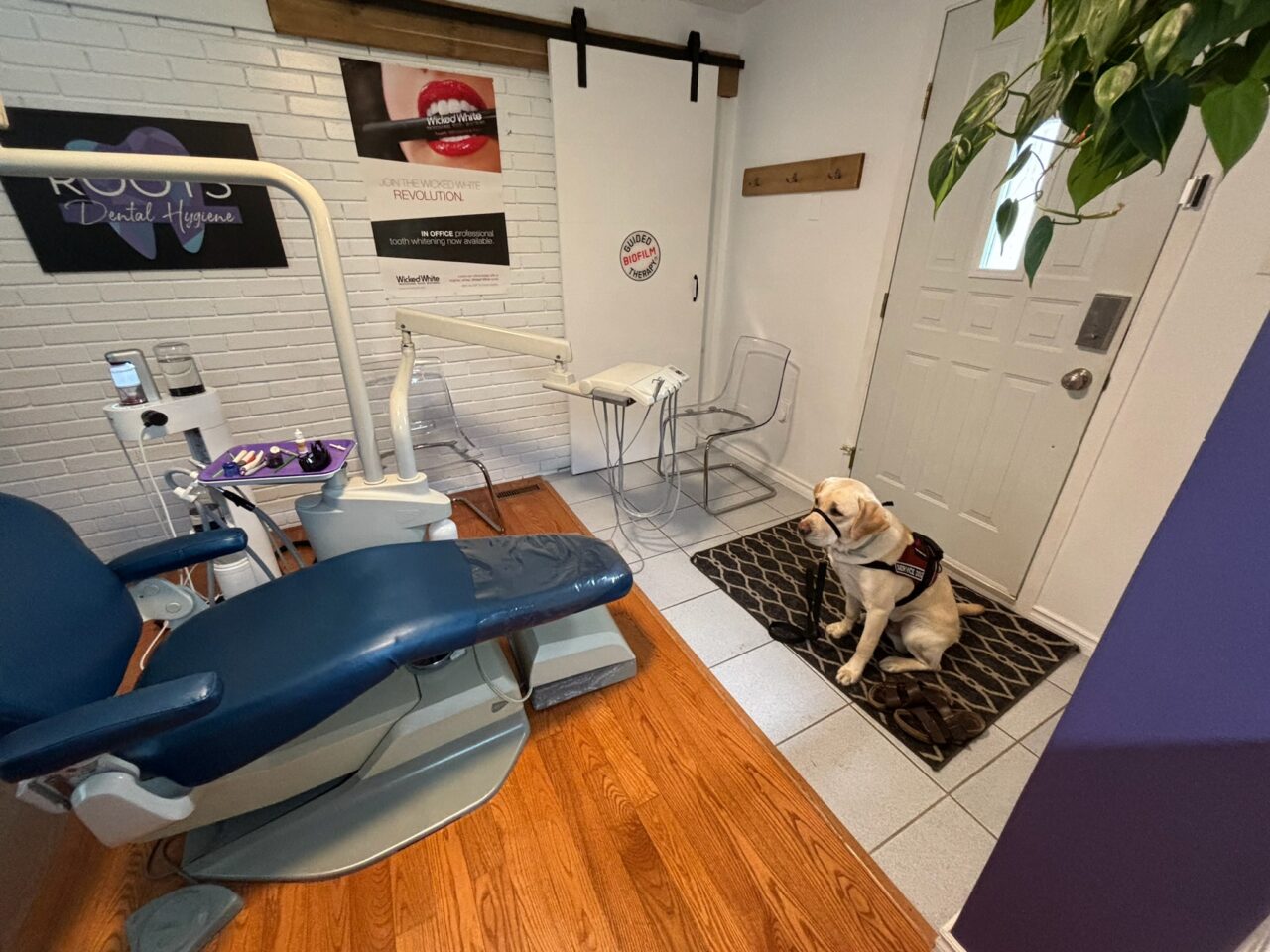
In September 2026, NYC Health + Hospitals/Elmhurst welcomed a new member to its behavioural health department.
Weasley, a two-year-old Labrador and Golden Retriever cross, joined the hospital through a partnership with Canine Companions. His assignment is to work alongside mental health professionals supporting patients in adult, adolescent, and forensic inpatient psychiatric services.
The hospital has called the initiative PAWS to HEAL, short for Psychiatry Animal-Assisted Wellness Support to Help Ease All Loads.
The announcement offers an unusually detailed look at how a professionally trained Facility Dog can be integrated into mental health programming, including the clinical responsibilities, canine skills, and safeguards involved.
A Working Dog With More Than 40 Trained Commands
Weasley was bred, raised, and professionally trained by Canine Companions, an organization that prepares assistance dogs for people with disabilities and Facility Dogs for professional settings.
According to the hospital, Weasley is trained to perform more than 40 commands, including retrieving objects, opening doors, and providing calming pressure across a person’s lap or body.
Those skills give his handlers opportunities to incorporate the dog into activities that have specific therapeutic objectives.
A participant might practise communication by giving the dog a sequence of commands. Another activity might involve observing the dog’s responses, recognizing behavioural cues, or using interaction with the dog to support attention and engagement.
The hospital has identified emotional regulation, anxiety reduction, socialization, communication, self-esteem, and participation in treatment as areas of interest.
Activities may include mindfulness exercises, creative arts, and structured interactions using Weasley’s trained behaviours.
These are the program’s intended applications. The hospital has not yet published clinical outcome data demonstrating that Weasley’s participation improves those measures.
Six Years of Preparation
One of the more interesting details in the hospital’s announcement is how long the program took to develop.
Elmhurst’s Department of Psychiatry and Behavioral Health Services spent approximately six years working toward a permanent Facility Dog program.
During that period, the hospital maintained a smaller pet-therapy program through an external community organization while developing policies, clinical activities, consent procedures, and other requirements for integrating a working dog into patient care.
That preparation reflects the responsibilities involved in introducing a dog into a psychiatric treatment environment.
A Facility Dog must be trained for the work, but the organization also needs to establish how the dog will participate, who is qualified to handle it, which patients may be appropriate participants, and what procedures will protect everyone involved.
At Elmhurst, Weasley’s primary handler is Dr. Angelica Terepka, the hospital’s Director of Psychology. His secondary handler is Erin Carroll, a licensed creative arts therapist.
Both completed an intensive two-week practical training program through Canine Companions.
One of the designated handlers must be present whenever Weasley works with patients.
Patient Consent and Clinical Screening
The hospital has established specific participation requirements.
Patients must consent before taking part in the program and undergo clinical screening to determine whether participation is appropriate.
Patients who are fearful of dogs, have allergies, or do not wish to participate are not present during sessions.
Weasley does not interact with patients experiencing an acute psychiatric emergency or those in restraint or seclusion.
Hand hygiene is required before and after interactions.
These procedures recognize that animal-assisted interventions require the same attention to informed consent, safety, and professional responsibility as other activities delivered within healthcare services.
A dog’s presence may be welcome to many patients, but it cannot be assumed to be appropriate for everyone.
Protecting the Dog’s Welfare
Weasley is scheduled to work four days per week, with structured group sessions typically lasting 30 to 45 minutes.
His schedule includes designated rest periods between activities.
Handlers are trained to monitor his behaviour, comfort, and willingness to participate throughout the working day. After work, he returns home with his primary handler.
These details are particularly relevant when considering the demands placed on Facility Dogs in clinical environments.
A dog working with multiple people may encounter unfamiliar movements, sounds, emotional responses, and environmental conditions.
The handler must recognize when the dog needs a break, when an interaction should be adjusted, and when participation should end.
The dog’s ability to disengage and recover is part of responsible program delivery.
The Professional Partnership
The Elmhurst program illustrates how a Facility Dog can work within the professional responsibilities of its handler.
The dog contributes trained behaviours and opportunities for interaction. The qualified clinician determines the therapeutic objectives, assesses whether participation is appropriate, and guides the intervention.
This is consistent with the approach Fire Team K9 takes in developing Operational Stress and Trauma Intervention Facility Dog teams.
Our Facility Dogs begin with the same foundational training as our Operational Stress Injury Service Dogs before continuing their preparation to work with multiple people alongside qualified mental health professionals and trained peer support personnel.
A handler may use a dog’s trained behaviours during activities involving emotional regulation, communication, grounding, or social engagement.
The activity must remain appropriate to the handler’s qualifications and the needs of the participants.
A peer support worker may facilitate an educational or supportive activity, while a qualified psychotherapist may incorporate the dog into a clinical intervention within their professional scope.
The dog’s skills create possibilities for participation. The handler’s expertise determines how those possibilities are used.
Evaluating the PAWS to HEAL Program
Elmhurst has identified several measures it intends to examine as the program develops.
These include patient experience, participation in group therapy, changes in mood, and motivation related to behavioural change.
Canine Companions will also provide ongoing support, evaluations, and health monitoring for Weasley throughout his placement.
These plans are encouraging because they establish outcomes that can be examined as the program operates.
Attendance may show whether patients are interested in participating. Changes in mood or engagement require additional assessment. Determining whether the dog’s participation improves clinical outcomes would require research capable of distinguishing its contribution from other aspects of treatment.
The hospital’s September announcement describes the launch and intended operation of the program. It does not yet provide evidence of clinical effectiveness.
Applications for Veteran and First Responder Mental Health Programming
Although Elmhurst serves a different population from Fire Team K9, several aspects of its model are relevant to mental health programming for veterans and first responders.
The hospital has defined the dog’s working role, selected professionally qualified handlers, developed structured activities, established participation safeguards, and identified outcomes for evaluation.
Those same considerations apply when developing canine-assisted interventions for operational stress injuries.
For example, a Facility Dog working with a group of first responders might participate in an exercise involving communication, attention, and recognizing changes in another individual’s behaviour.
A mental health professional may incorporate trained canine behaviours into an intervention addressing specific treatment goals.
The activity can be adapted to the professional setting and participant population while retaining clear objectives and appropriate boundaries.
The Elmhurst program provides a current example of an organization investing in the preparation required to make those activities part of established mental health services.
As PAWS to HEAL develops, its evaluation may provide further information about patient engagement and the practical use of trained Facility Dogs in behavioural healthcare.
For FTK9, the most relevant aspect of this announcement is the attention given to the complete working team: the dog, its professional handler, the clinical environment, and the people participating in the intervention.
References
NYC Health + Hospitals. (2026, September 14). NYC Health + Hospitals/Elmhurst welcomes Weasley, new hospital facility dog to support behavioral health patients. https://www.nychealthandhospitals.org/pressrelease/nyc-health-hospitals-elmhurst-welcomes-weasley-new-hospital-facility-dog-to-support-behavioral-health-patients/
Assistance Dogs International. (n.d.). ADI terms and definitions. https://assistancedogsinternational.org/resources/adi-terms-definitions/
National Institute for Health and Care Excellence. (2018). Post-traumatic stress disorder (NICE Guideline NG116). https://www.nice.org.uk/guidance/ng116
